For Students by Students.
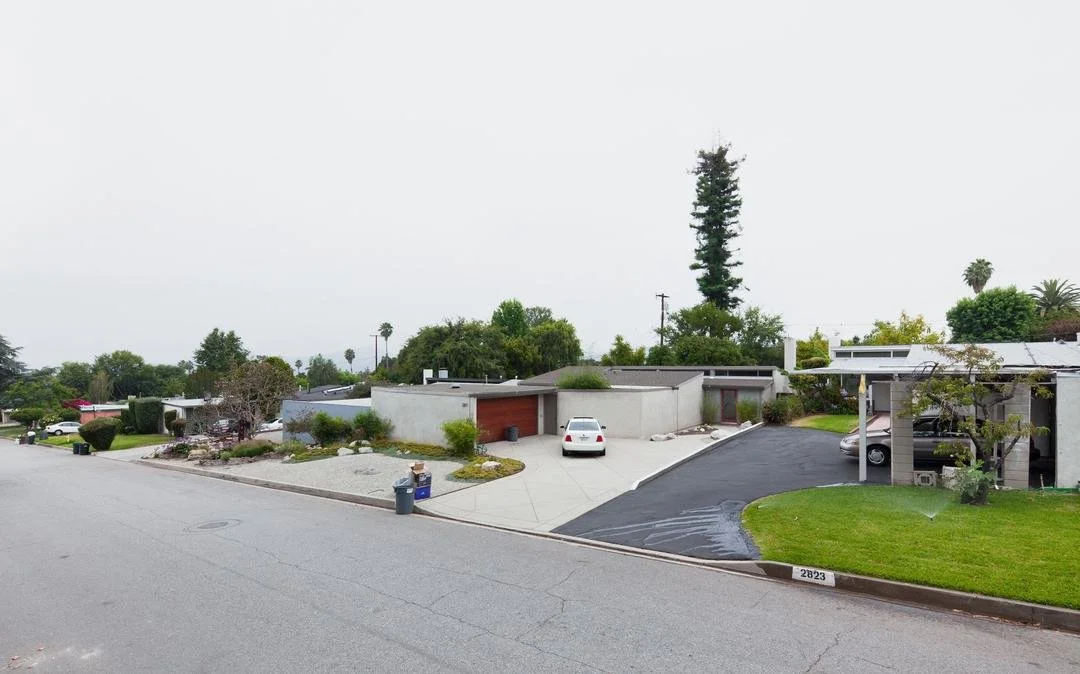
The Park Planned Homes
Participants are invited to design a new Park Planned Community for the year 2035, rebuilt on the original single-street site and grounded in the principles that defined Ain’s work:
Human-centered modernism
Affordable and flexible housing
Shared community space and park-like living
Prefabrication and construction efficiency
Radical openness and transparency
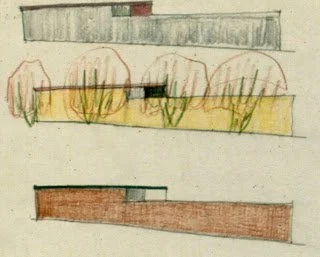
Constraints and Must-Haves
Project Constraints
The design must remain within the original site boundaries.
A minimum of 28 residential units must be provided.
Units should remain modest in scale (reflecting Ain’s affordability goals).
Community open space must remain continuous and un-fenced.
No private front fences (consistent with original vision).
Parking solutions must be integrated but visually minimized.
All proposals must consider wildfire risk and show strategies to mitigate ignition and loss.
Must-Haves / Required Elements
Complete Site Plan with unit placement and circulation.
Fire-resilient building materials clearly identified.
Native and drought-resistant landscaping.
Passive design strategies (orientation, ventilation, shading).
Community program (shared garden, workshop, play space, pavilion, etc.).
Accessibility strategies.
Affordability logic (prefabrication, modularity, material sourcing).
Sustainability Performance Diagram (energy, water, carbon).
Requirements
Boards
Two boards per entry
24” x 36”, landscape orientation
PDF, maximum 50 MB
1-inch border required
No names or identifying information on boards
Required Drawings
Overall Site Plan
Landscape + Fire Management Plan
Typical Home Plans (1–2 units)
Sections and Elevations
Axonometric or Exploded Assembly Diagram
Two Rendered Views (one interior, one exterior)
Material Palette & Systems Board
Narrative Text (300 words)
Resilience Strategy Diagram
Community & Circulation Diagram
File Naming Format
CompetitionID_TeamName_Board1
CompetitionID_TeamName_Board2
All submissions are to be digital and uploaded via the competition submission link.
Competition Scope
Participants must redesign all 28 homes on the original street, creating a coherent, resilient neighborhood plan that includes:
Site Plan – entire street with 28 redesigned units
Individual Home Typologies (minimum of two variants)
Community Space(s)
Landscape & Fire Resilience Strategy
Material Strategy & Sustainability Framework
Projects must integrate current building and fire-safety codes, and include:
Solar access and shading
Fire-resilient planting
Water conservation infrastructure
Contemporary zoning considerations
Accessibility
Design Criteria
1. Resilience & Fire Adaptation — 30%
Focus on:
Fire-resistant materials
Ember-resistant construction
Defensible space
Community safety planning
Climate-adaptive design
2. Sustainability & Ecological Performance — 25%
Including:
Low-carbon materials
Regenerative landscapes
Water systems
Renewable energy
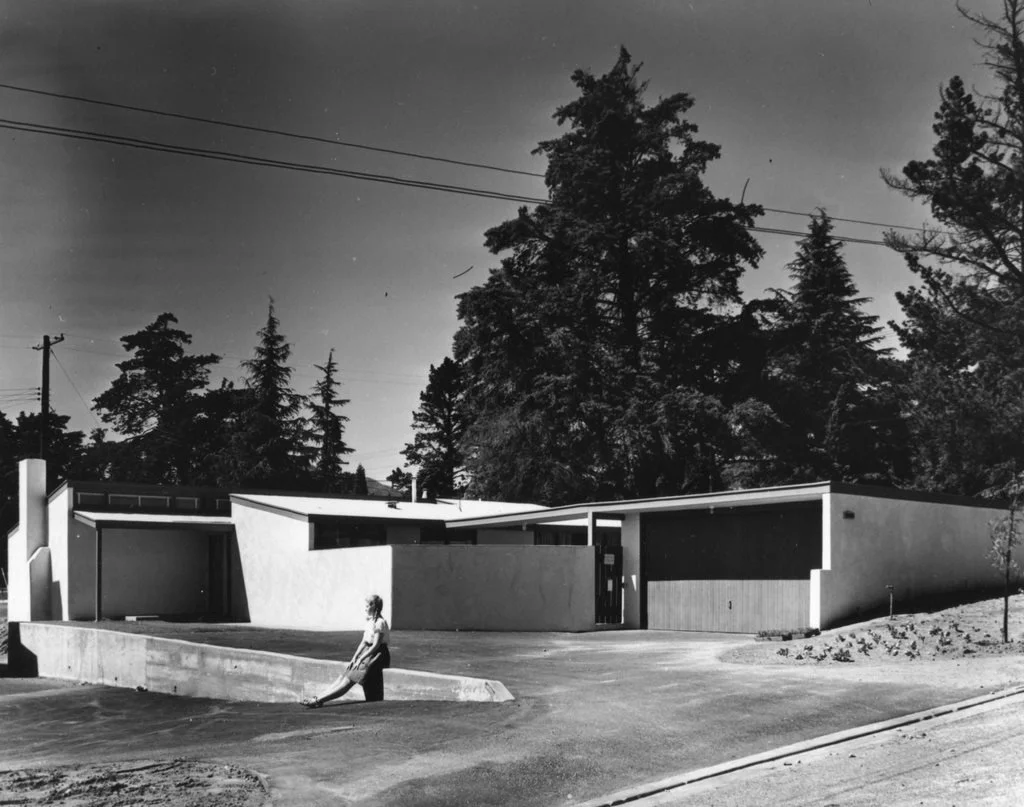
3. Community-Oriented Modernism — 20%
Reinterpretation of Ain’s vision:
Transparency
Connection
Collective spaces
Indoor–outdoor living
4. Innovation & Conceptual Strength — 15%
5. Clarity & Graphic Communication — 10%.
Jury Compostition
A multidisciplinary panel including:
Architects including a Modern housing specialist
Building science / materials expert
Ecological landscape architect
Representative from the local community
Woodbury University faculty member
Participants
Open to:
Undergraduate and Graduate Architecture Students
Landscape Architecture Students
Urban Design & Environmental Design Students
Interdisciplinary Student Teams (up to 5 members)
Working professionals may not participate.
Award Categories & Prizes
GRAND JURY AWARD — Best Overall Project
$1,000 prize, WEDGE Gallery showcase, and panel presentation
Most Resilient Community Award
Magazine publication, WEDGE Gallery showcase, and panel presentation
Most Sustainable Design Award
Sponsored visit to a resilience or innovative materials lab, WEDGE Gallery showcase, and panel presentation
COMPETITION REGISTRATION:
Sign-up for the competition on the form to the right. Email updates will be sent out soon!